Contents
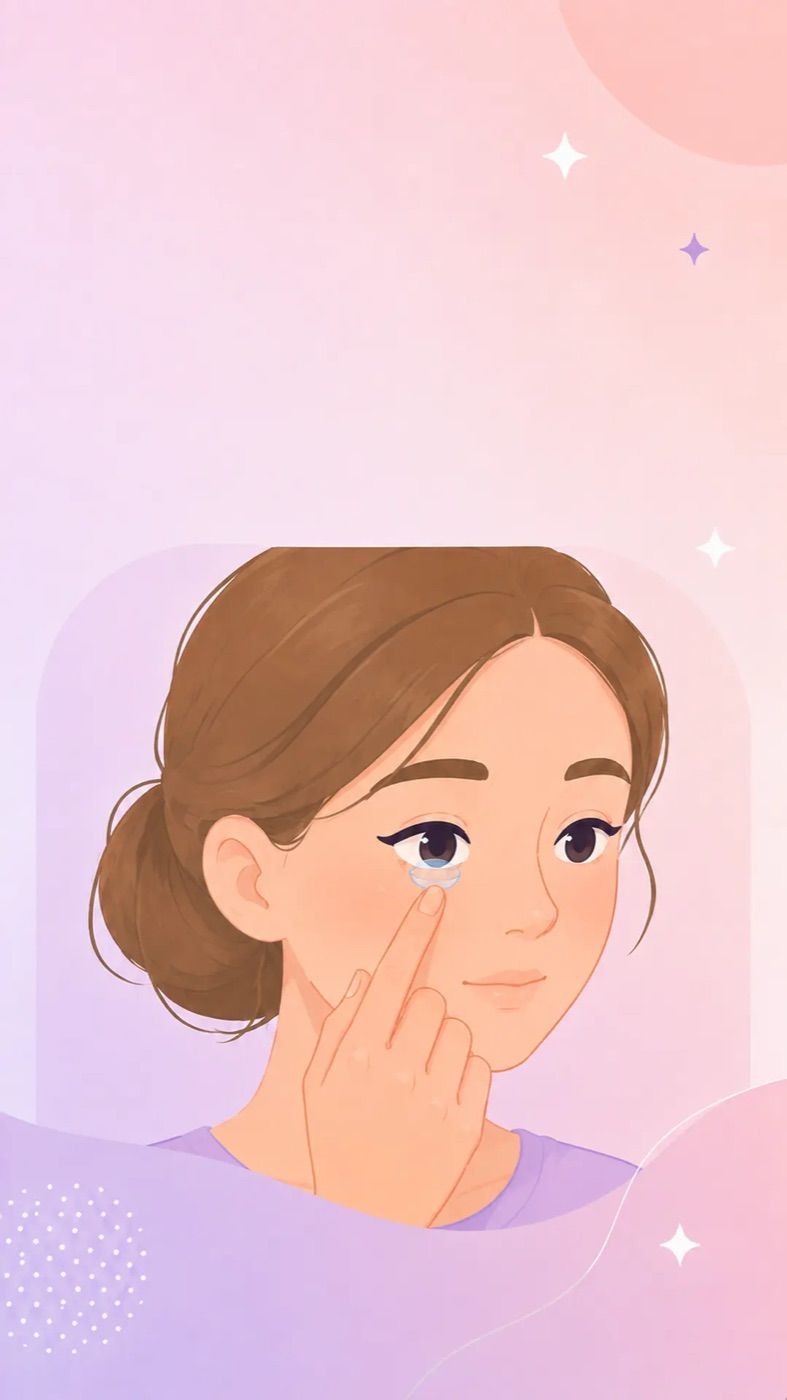
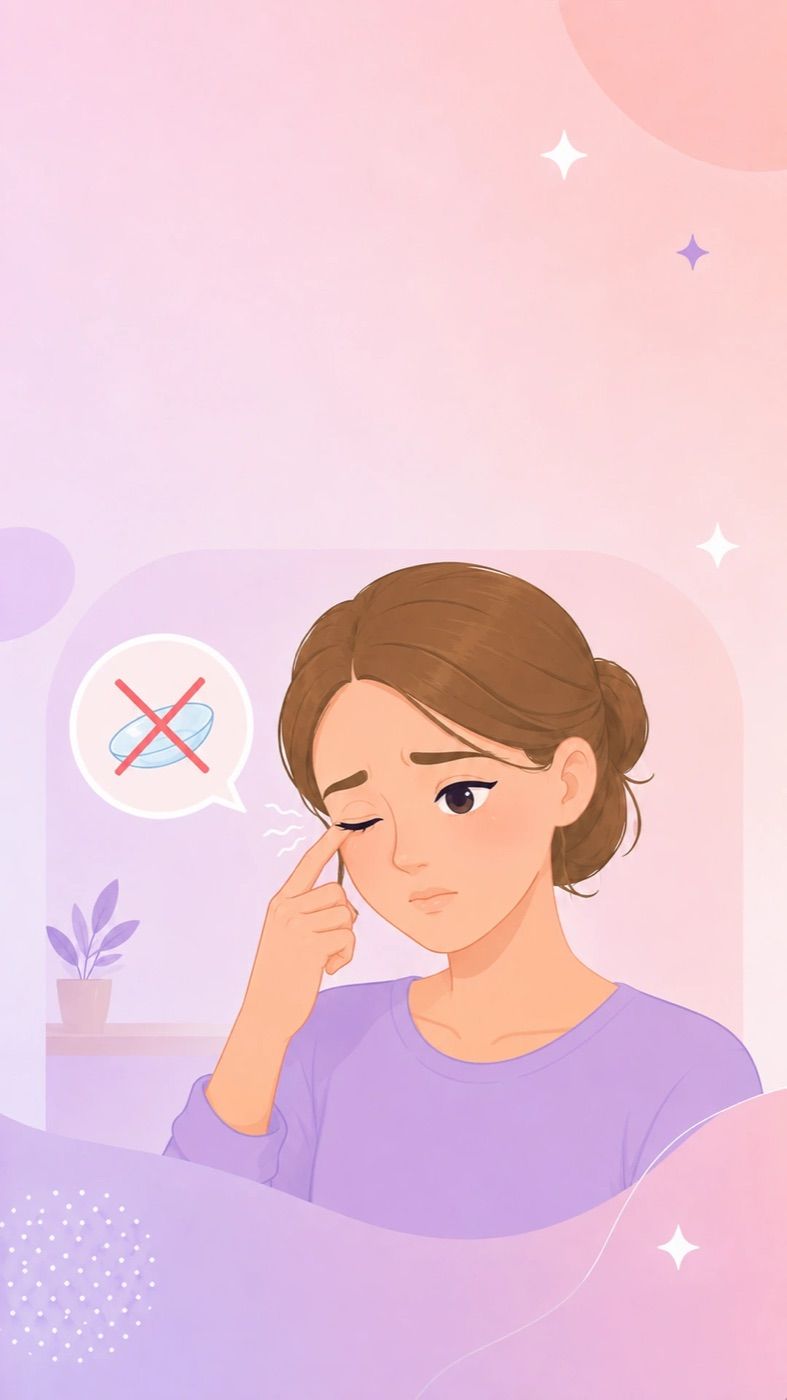
Most first tries end with blinking, watery eyes and the lens back on your finger. That’s normal: your eye protects itself by reflex, and a few days of practice gets you past it. Here’s how to put in, take out and store soft contacts.
What you’ll need
Find a spot with a mirror and good light. If you’re over the sink, close the drain so a dropped lens doesn’t disappear.
Have within reach:
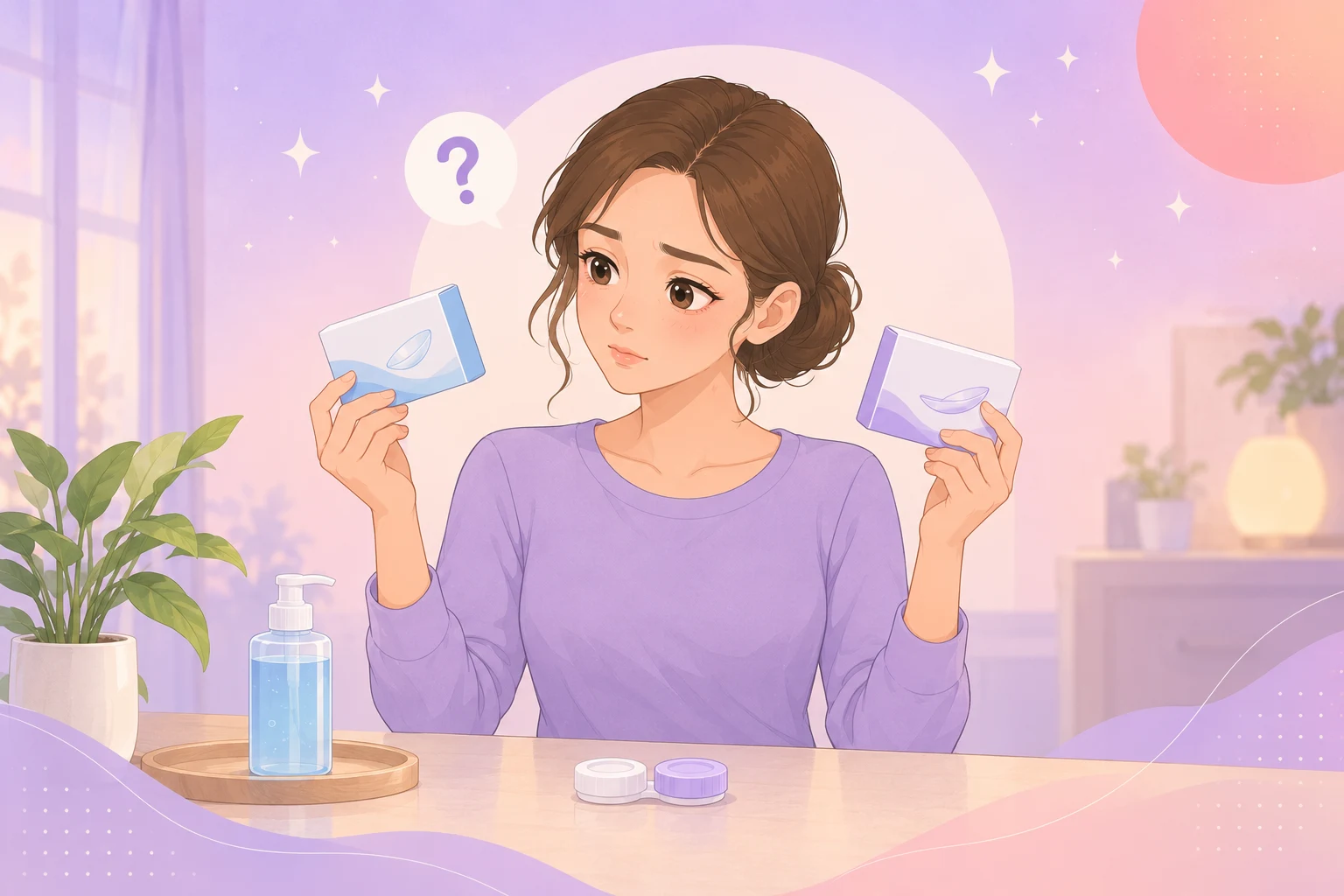
- your lenses – a fresh blister pack or the ones stored in your case;
- contact lens solution, if you wear reusable lenses;
- a clean lens case;
- a mirror;
- a lint-free towel.
Keep your nails short and smooth – a sharp edge can scratch your eye or tear the lens. Save hand lotion for after: oily fingers leave a blurry film on the lens.

How to put in contacts
Always start with the same eye, say your right one, so you never mix up lenses with different prescriptions.
- Wash and dry your hands. A lens sticks to wet fingers instead of moving onto your eye.
- Check the lens. Put it on your index fingertip and look at it from the side: it should be clean, intact and not inside out. If it’s torn, don’t wear it.
- Hold your eyelids open. Pull your lower lid down with the middle finger of the same hand, and hold the upper lid near the lash line with your other hand.
- Place the lens. Look straight ahead or slightly up and lightly touch the lens to your eye. Don’t press – your eye’s moist surface will pick it up.
- Blink. Slowly let go and blink a few times – the lens will settle on its own. If it’s in right, you’ll barely feel it.
- Repeat with the other eye. For reusable lenses, dump the old solution, rinse the case with fresh solution and let it air-dry upside down on a clean tissue.


How to tell if a contact is inside out
An inside-out lens feels more noticeable, fits worse and slides around when you blink. Check before it goes in:
- Look at it from the side. A lens that’s right side out looks like a bowl with edges pointing up. If the edges flare out like a saucer, it’s inside out.
- Try the taco test. Gently pinch the lens. If the edges curl in toward each other like a taco, you’re good. If they roll outward, flip it.
- Look for markings. If the tiny numbers or letters near the edge read correctly, the lens is right side out.
How to take out contacts
Take your lenses out every night unless your eye doctor has prescribed extended-wear lenses. Don’t sleep in regular contacts, not even for a nap – your eyes get less oxygen while you sleep.
- Wash and dry your hands.
- Look up. Gently pull down your lower lid with your middle finger.
- Slide the lens down. With the pad of your index finger, slide the lens off the cornea onto the white of your eye. It’s easier to grab there and less irritating.
- Pinch it out. Gently pinch the lens between your thumb and index finger pads. No nails.
- Toss it or store it. Dailies go in the trash – they’re never reused. Clean reusable lenses and put them in the case.
- Repeat with the other eye. Start with the same eye as in the morning.
If the lens seems stuck to a dry eye, don’t pull at it. Use rewetting drops made for contacts, wait a couple of minutes and blink – then it slides off easily.
How to store reusable contacts
Solution clears away the deposits and germs that build up on lenses during the day. Steps vary by product, so follow the instructions on yours. The basics:
- Rinse the lens with fresh solution. If the instructions call for it, gently rub it in your palm for a few seconds.
- Put each lens in its own side of the case, fill with fresh solution and close the lid tightly.
- Use fresh solution every time. Never top off or reuse old solution.
- Never use tap water on your lenses or case, and never wet a lens with saliva. Water and your mouth carry microorganisms that can cause serious eye infections.
- Replace your lens case at least every three months.


If something goes wrong
The lens slid under your eyelid. It can’t get lost behind your eye. Look away from where you feel it, blink and add rewetting drops if needed. It usually comes back on its own, or you can nudge it through your closed lid.
The lens is inside out. Take it out, rinse it with solution and put it back in the right way.
It feels gritty or burns. Take the lens out, rinse it with fresh solution and look it over: an eyelash may be stuck under it, or the lens may be torn. Replace a damaged lens. With dailies, just open a fresh one.
You dropped the lens. Clean and disinfect a reusable lens with solution as the instructions say. Throw a daily lens away.
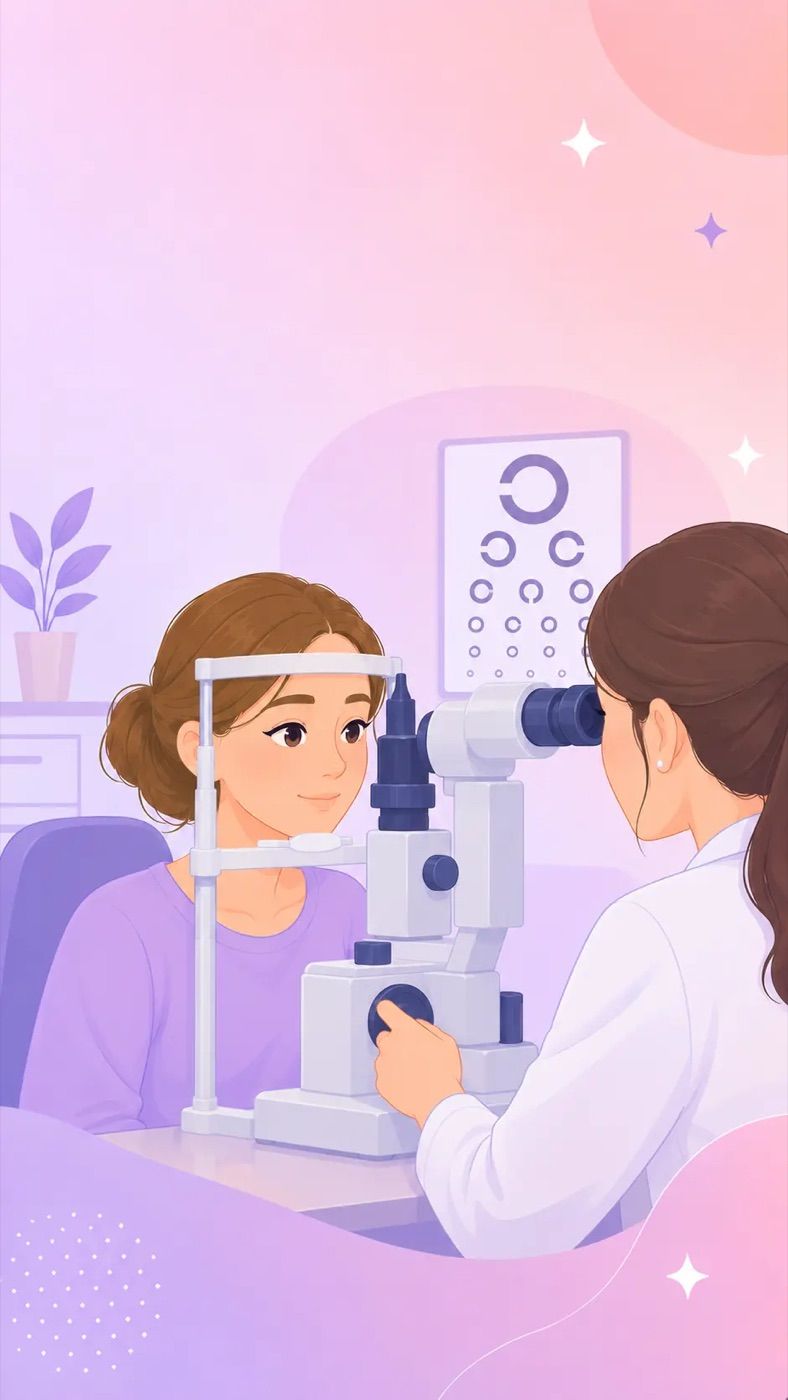
For the first week or two, wear your contacts for shorter stretches and build up gradually. Your eye doctor will tell you the right schedule and lenses for you.
How LensPing helps
LensPing counts the days from when you open a new pair and reminds you when it’s time to switch – for daily, 7-day, 30-day or 90-day lenses, or a custom schedule. It also tracks how many lenses you have left and reminds you to reorder before you run out.
The eye wellbeing diary lets you log dryness, redness, irritation, itching, burning, tearing, blurry vision and rewetting drops, so your doctor can see when discomfort shows up and why. You can also schedule eye doctor visits and keep your prescription history.
This article is for general information only and is not a substitute for advice from your eye doctor.