Contents
Once contacts are part of your routine, shortcuts creep in: mixing up left and right, wearing a pair “just one more week,” lending a spare to a friend. Here are seven habits worth making automatic.
Always start with the same eye
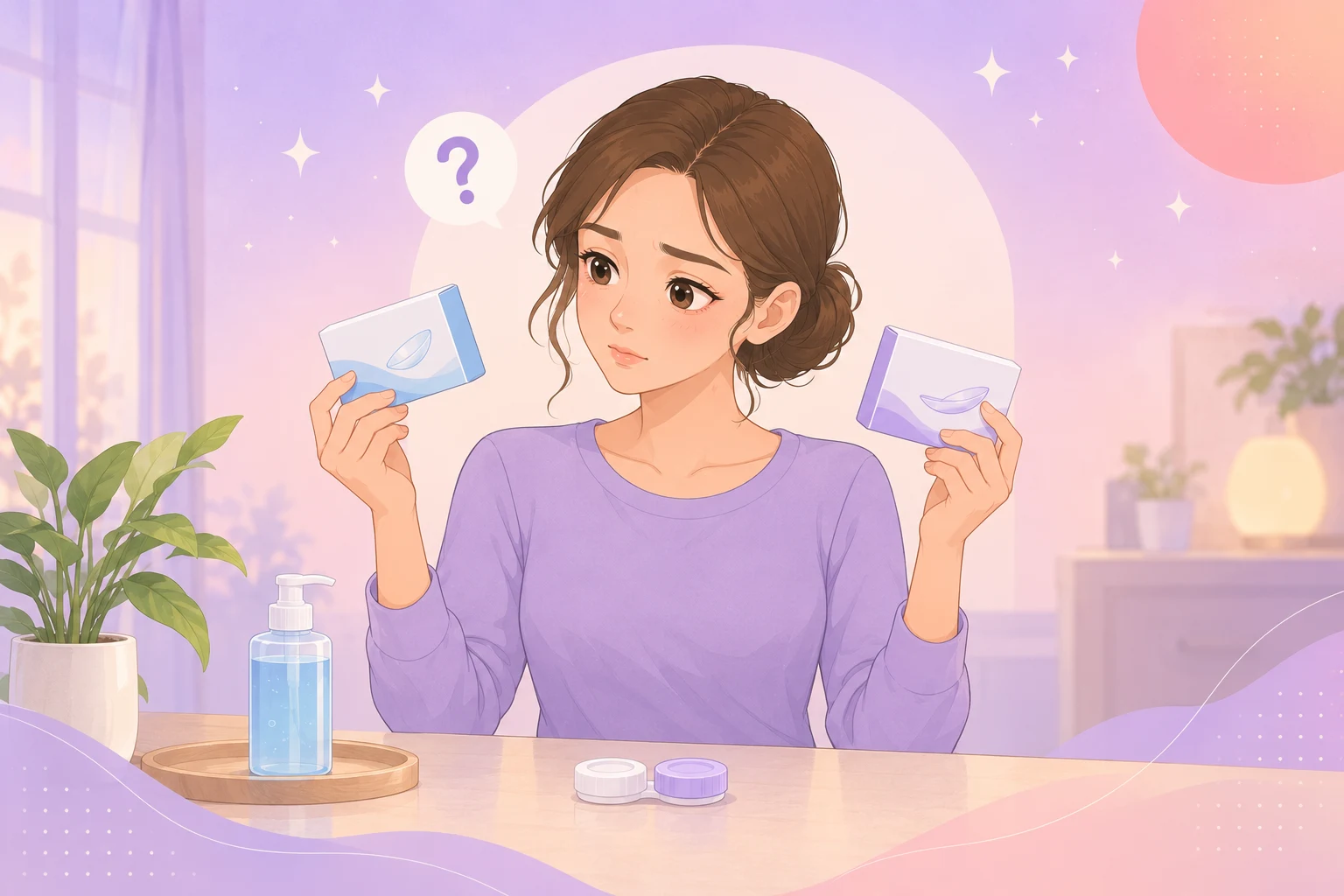
If each eye has a different prescription, swapped lenses mean blurry vision and eye strain all day. Even if both prescriptions are the same, never move a lens from one eye to the other: deposits and germs from one eye collect on the lens, and swapping carries them to the other eye. Pick an order and stick with it:
- always put in the same eye’s lens first, for example your right;
- take your lenses out in the same order;
- store each lens in its own side of the case: R for right, L for left.

Never wear a damaged lens
A tear, a nicked edge, a fold that won’t smooth out or a cloudy spot all mean the lens shouldn’t go in. A damaged contact can scratch your cornea, sits poorly and traps debris more easily.
The check takes a few seconds:
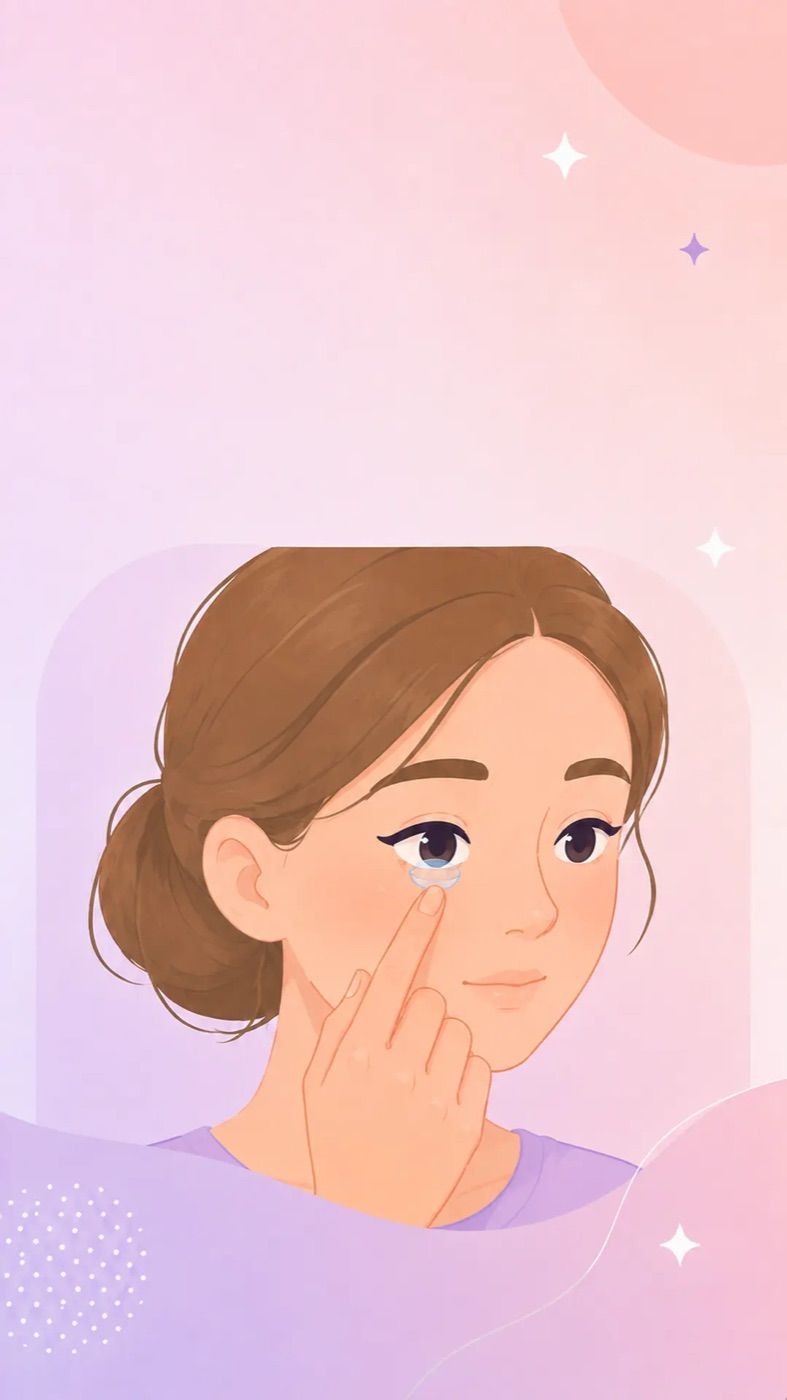
- Wash your hands and dry them with a lint-free towel.
- Place the lens on the tip of your index finger.
- Look over the edges and surface for tears, chips or specks of debris.
- Make sure it isn’t inside out: a lens that’s right side out looks like a bowl with straight edges, an inside-out one like a saucer with a flared rim.
When in doubt, throw it out.

Contacts are personal – never share them
Don’t share contacts, even with a friend who has the same prescription and brand. Germs from someone else’s eyes and hands travel with the lens. And contacts are fitted not only by power but also by base curve and diameter, so someone else’s lens may not fit your eye.
That includes colored or costume lenses for a party – they still need a prescription. Eye drops, lens cases and solution are personal too.

Pack a spare pair when you travel
Lenses get lost or torn more often on the road, and finding your exact prescription away from home can be a hassle. Even for a short trip, pack:
- spare contacts – one or two pairs more than you’ll need;
- your glasses, in case your eyes get tired or a lens tears;
- a clean lens case;
- travel-size contact lens solution (TSA allows small bottles in your carry-on);
- rewetting drops, if you use them.
Two-week and monthly lenses count from the day you open the blister pack, not the days you wore them – easy to forget on a trip.

Lenses in first, makeup second
In the morning, contacts go in before makeup. At night, lenses come out before you remove makeup. That keeps mascara, eyeshadow and face cream out from under the lens, and makeup remover won’t leave a film on it.
A few more tips:
- put your lenses in before moisturizer or lotion, since oily residue transfers to the lens;
- don’t line the inner, wet rim of your eyelid (the waterline);
- choose a mascara without fibers that can flake into your eye;
- use hairspray before your contacts go in, or close your eyes while you spray.

Don’t stretch your replacement schedule
The most common mistake: your lenses feel fine, so why not keep wearing them? But by the end of their lifespan, protein and lipid deposits build up, less oxygen gets through, and the risk of dryness, redness and irritation goes up, even if you don’t notice anything yet.
How to stay on schedule:
- throw daily lenses away at night and never wear them twice;
- replace two-week, monthly and quarterly lenses as the instructions say, counting from the day you open the pack;
- use fresh solution in your case every time – never top off or reuse old solution;
- replace the case itself at least every three months;
- don’t sleep in your contacts unless your eye doctor has prescribed extended-wear lenses.

Get a yearly eye exam
Even if everything feels fine, get an eye exam once a year, or more often if your doctor says so: vision changes, and early changes to the cornea have no symptoms. Your doctor will check your vision, examine your eyes with a slit lamp and update your prescription if needed. In the US, contact lens prescriptions usually expire after a year, so the visit also keeps you able to reorder.
To get the most out of the appointment:
- bring your lens box or note the brand, power and base curve;
- mention how many hours a day you wear your lenses and whether your eyes feel dry by evening;
- bring up any redness or irritation, even if it’s cleared up.
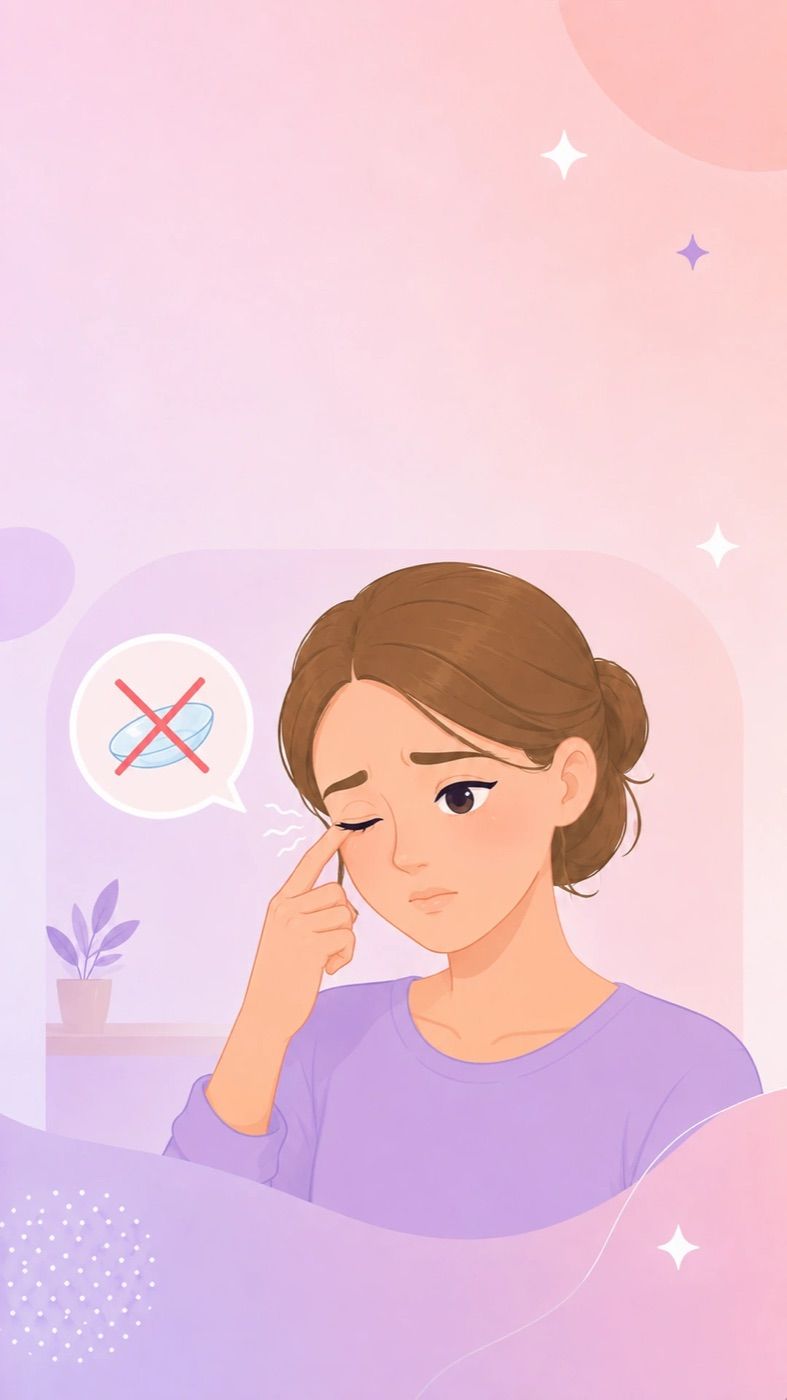
Don’t wait for your annual visit if your eye hurts, turns red, waters a lot or your vision changes. Take your lenses out and see an eye doctor.

How LensPing helps
Most of these habits come down to remembering things, and LensPing does the remembering for you. The app is free with no ads:
- it counts down to your next lens change for daily, 7-, 30- or 90-day lenses or a custom schedule, and reminds you when it’s time for a fresh pair;
- it tracks how many lenses you have left and reminds you to reorder in time, including before a trip;
- it reminds you about your next eye doctor visit and saves your prescription after each exam, so you can see your vision history;
- it keeps an eye wellness log: dryness, redness, irritation, itching, burning, watery eyes, blurred vision and rewetting drops – handy to show your doctor.
It doesn’t replace your eye doctor, but it keeps you on schedule.
This article is for general information only and is not a substitute for advice from your eye doctor.